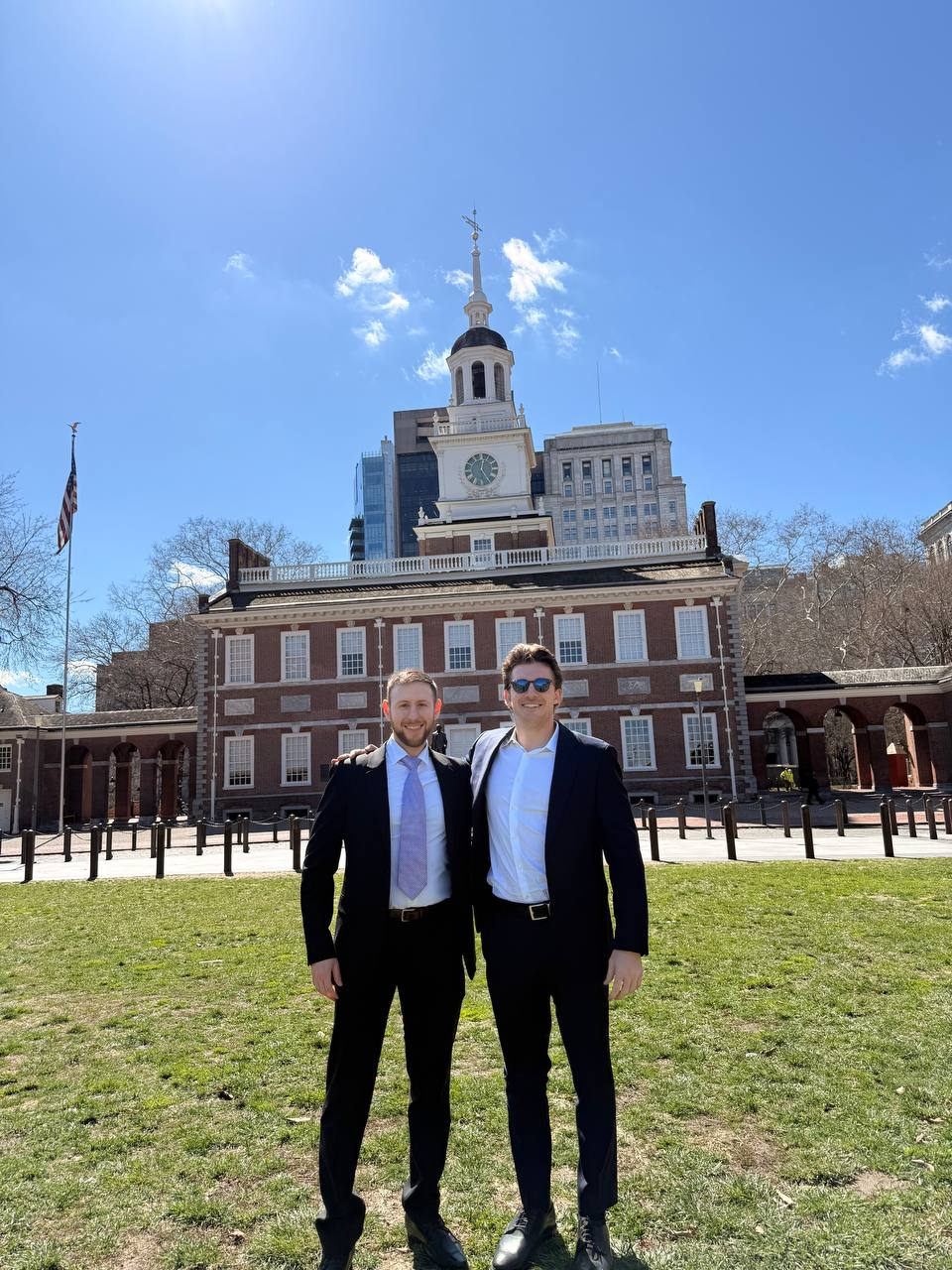
ScreenComply, via Guardian Robotics Contracting, Inc., our parent company, was in Philadelphia to meet with the Office of Personnel Management (OPM) for Industry Day. The contract scope: building out USA Hire, the federal government's centralized hiring assessment platform.
Our team was on the ground to share information regarding the RFI (Request For Information), highlighting the growing impacts of AI on hiring integrity and making the case that any modern solution for USA Hire must include protections against AI-assisted fraud, from deepfake identities and AI-generated text to hidden second-device tools.
We look forward to helping be part of the USA Hire buildout and are excited for the future of integrity-first federal hiring.
What assessment integrity means in federal hiring
Federal hiring depends on a simple premise: a result reflects the candidate's own knowledge and skill. Candidate assessments, structured interviews, and certification and training exams delivered on a candidate's device all rest on that premise. When AI assistance is available beside every assessment, integrity means being able to show afterward that a session was what it appeared to be, and being able to explain the evidence when it was not.
That is an outcome, not a single tool. The agency selects the proctoring scope for each assessment rather than treating every workflow as identical. It keeps its own assessment process and reviews any finding in the context of the applicable policy and any approved accommodation.
The risks our team raised, deepfake identities, AI-generated text and hidden second-device tools, sit alongside others described across this site: desktop AI assistants, hidden overlays, remote access and virtual machines. Each can sit outside what a browser window or a webcam shows.
What device-level evidence adds to an unproctored or remotely proctored assessment
An unproctored assessment taken on the candidate's own device has no observer at all. A remotely proctored one usually sees the browser window and the camera frame. Neither view necessarily shows a separate desktop application, an overlay built to hide from screen capture, a remote-control session or an assessment running inside a virtual machine.
Device-level proctoring adds observations from the candidate's device during the assessment window. At a high level, ScreenComply records that an AI assistant or overlay was running beside the assessment and when, or that a remote session or virtual machine was in use and when. These are time-stamped entries a reviewer can place in the context of the assessment. They describe activity, not a conclusion about the candidate's intentions.
The scope stays narrow. Collection runs only during the session, and ScreenComply does not read files, log keystrokes or monitor anyone outside the assessment window. The organization can choose Prevent, which closes restricted tools before they are used, or Detect, which records activity for review without blocking it. Both produce the same evidence report.
Device-level evidence works alongside the assessment platform already in use rather than replacing it. The assessment stays where it is, and the integrity layer adds a reviewable record of the session. That holds in remote and in-person testing alike, because the same desktop assistant can run on a test-center computer as easily as on a laptop at home.
How human review fits a merit-based process
A merit-based process depends on decisions that are consistent, explainable and open to challenge. Software that rejects candidates automatically works against all three. ScreenComply supplies time-stamped evidence for human adjudication and does not automatically fail an assessment, reject a candidate or decide whether misconduct occurred. The agency's authorized reviewers make the decision.
In practice that means agreeing in advance who reviews a flagged session, giving candidates notice of what is enabled, letting a candidate explain an observation and recording the decision with the evidence behind it. Retention is set by the agency under agreed data processing terms. Our page on evidence and human review shows how flagged sessions reach a reviewer with the evidence attached.
Accommodations belong in the same process. Permitted assistive technology, alternative input devices and approved applications should be agreed before the assessment, so a reviewer sees them as context rather than as a concern. Candidates should know before the session when proctoring runs, what is recorded at a high level, who reviews the evidence and how long it is kept.
For the wider picture, including current statuses, see integrity for federal assessments and interviews. ScreenComply is in the FedRAMP process, which is not an authorization or certification. Section 508 conformance documented in a VPAT. SOC 2 Type 2 examination in progress.